• China Unicom and Huawei leverage the 5G-A and all-optical 10G private network integrated solution to break down the barriers between IT and OT networks, and enables the implementation of services such as AI industrial inspection, predictive maintenance of equipment, precise personnel positioning, and green optimization and regulation.
• The 50G-PON + FTTO + Wi-Fi 7 all-optical networking solution achieves "ultra-10G into the plant area, 10G into workshops, and 1G to machines," establishing an end-to-end physically isolated 5G-A private network for thermal power.
• AI-powered green regulation dynamically optimizes unit parameters, saving approximately 150,000 kWh of electricity and reducing carbon emissions by about 120 tons annually, thus supporting the low-carbon transition. Plant's inspection efficiency improved by 60%.
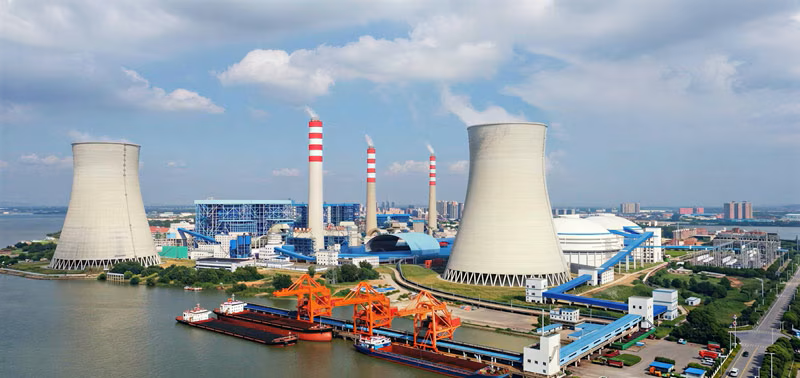
EZHOU - Ezhou Smart Power Plant Project has been successfully implemented. China Unicom Hubei Branch, together with Huawei, uses Huawei's 5G-A and All-optical 10G private network solution to break down the barriers between IT and OT networks. We will implement innovative services such as AI industrial patrol inspection, predictive maintenance of equipment, precise personnel positioning, and green optimization and control on a large scale. We will promote the transformation of power plants from traditional manual O&M to modern production mode with few people and intelligent early warning features, and set a benchmark for digital intelligence transformation in the energy industry in Hubei Province, according to the official website of Huawei.
Aligning with the pilot construction standards of the Ministry of Industry and Information Technology (MIIT) for 10G optical networks, China Unicom Hubei Branch and Huawei jointly developed the 50G-PON+FTTO+Wi-Fi 7 all-optical networking solution, which achieves "Ultra-10G to the factory area, 10G to the workshop, and Gigabit to the machines." Built on an end-to-end 5G-A thermal power private network that is physically isolated from the power plant equipment network and the public network, the solution uses six outdoor macro base stations and indoor distribution systems to provide in-depth coverage of the entire plant area. The solution uses the 5GC UPF and MEC edge computing technologies to ensure that production data is not transmitted out of the campus, which strictly complies with the security specifications of the electric power industry, including service partitioning, horizontal isolation, and vertical authentication. In addition, it has the advantages of high bandwidth, low latency, high reliability, and strong security.
The solution establishes a digital and intelligent system framework of "1+4+1+3+N" to create a technical foundation that integrates hardware and software.
The "1" refers to a digital brain that coordinates AI warnings, equipment maintenance, personnel compliance, and safety monitoring. The “4” refers to four major scenarios: "4" refers to production control, intelligent maintenance, safety and security, and energy management. The second "1" refers to an intelligent middle platform that enables the collaboration of IoT, big data, and dual-zone enterprise clouds. By integrating hardware and software and isolating software through network slicing, three converged private networks are established: production, office, and monitoring. The "3" refers to these three converged private networks. The "N" refers to the "N" types of on-site terminals, such as sensors, inspection robots, and smart terminals, which are connected to complete the digital perception of all production elements.
The "Dual Ten-Gigabit" smart power plant establishes a deterministic private network and combines 50G PON to provide "ultra-broadband access with guaranteed performance" and 5G-A provides a "flexible and ubiquitous end node"; together, these elements form the communications foundation for the dual-wheel drive of the smart power plant. The AI industrial inspection platform deploys 272 cameras and thermal imaging devices, identifying equipment abnormalities and personnel violations around the clock. The system automatically dispatches alarms, achieving a shift from post-event handling to pre-event warning. By dynamically optimizing unit parameters through AI green regulation, the system saves approximately 150,000 kWh of electricity annually and reduces carbon emissions by about 120 tons, contributing to the low-carbon transition of thermal power.
The standard capabilities formed based on this solution can be replicated for commercial use in smart scenarios across various types of power plants. This enhances the quality and efficiency of services for users. After the application of the solution, the inspection efficiency of the Power Plant increased by 60%. This has earned high recognition from industry units such as the Ministry of Industry and Information Technology and the power industry organizations. China Unicom, leveraging its foundational advantages as a carrier in the Ezhou region, has collaborated with Huawei to explore a digital implementation path for the thermal power industry. This path integrates "5G-A + 10 Gigabit Optical Network + AI" and provides a construction paradigm for the digital transformation of thermal power enterprises in China.
China Unicom and Huawei will work together with more ecosystem partners to continuously deepen the integration and innovation of 5G-A, 10 Gigabit Optical Network, AI, and digital twins. This will iteratively upgrade the capabilities of unattended operations, intelligent scheduling, and low-carbon optimization, injecting new digital momentum into the construction of China's new power system.